
This post may contain affiliate links. Please read our disclosure policy.
Puerto Rican Pasteles are soft, savory masa bundles that are filled with juicy seasoned pork and wrapped in banana leaves for incredible flavor. They take time, but the rich, authentic flavor is completely worth it for any holiday table.
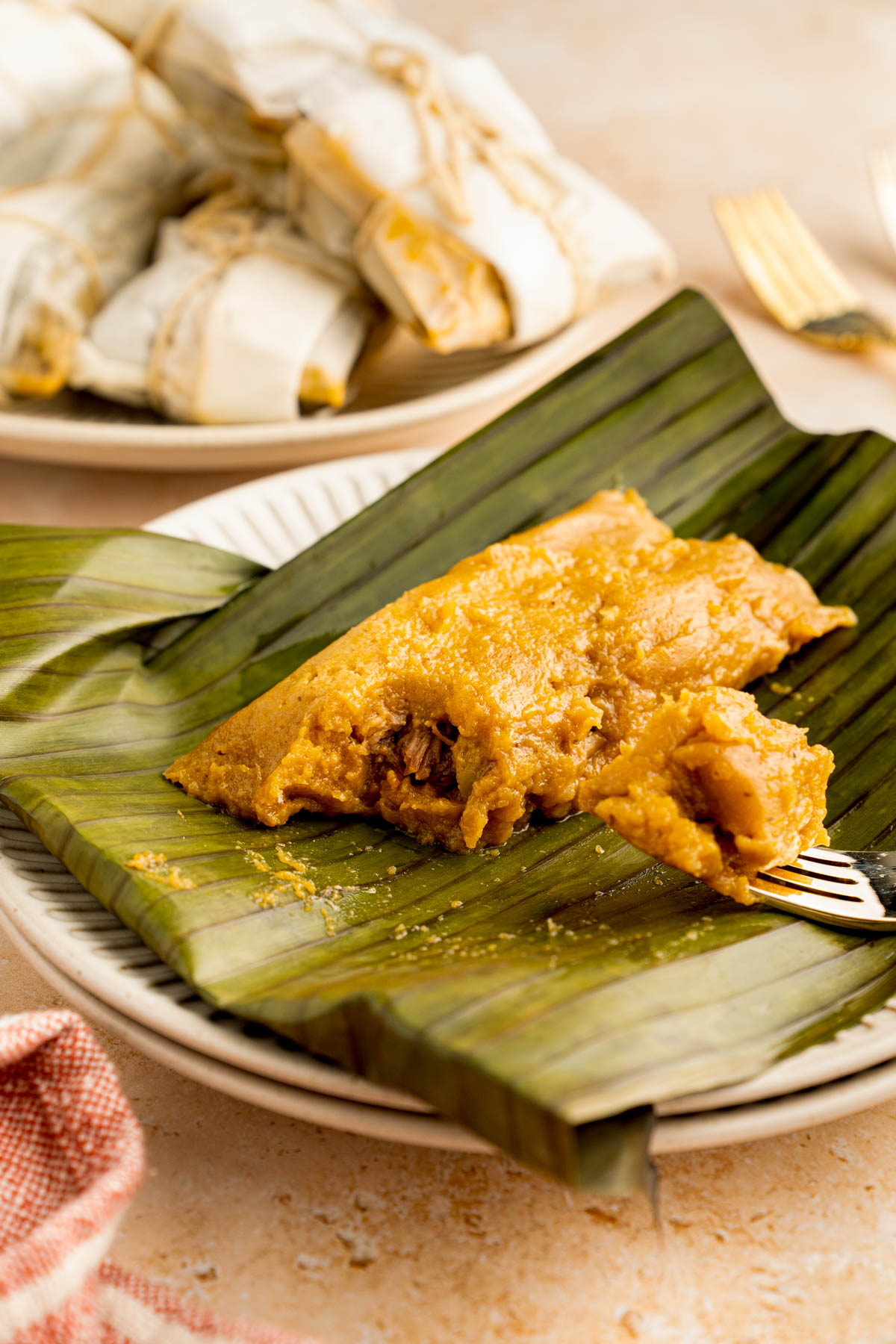
Warm, tender, and full of savory sofrito-seasoned pork, Puerto Rican Pasteles are the holiday dish that tastes like comfort and family traditions. They are a staple in Puerto Rican culture and one bite brings all the flavors of home rushing back.
The masa mixture comprises a mixture of bananas, batata sweet potatoes, malanga root, and kabocha squash, which blend together into a smooth mixture once cooked. After layering the seasoned pork on top, wrapping in banana leaves and cooking the bundles, you are left with a comforting, flavorful, and layered dish for the holidays.
Pasteles de masa are wonderful on their own but can also serve them with other Puerto Rican dishes such as Arroz con Gandules, Rabo Guisado, and Coquito.
Pasteles – A Puerto Rican Holiday Tradition
Packed with pork, banana, squash, some root vegetables, and seasonings, Puerto Rican pasteles offer a flavor bomb for your taste buds. Traditionally, Puerto Rican families make pasteles together due to how much work they involve.
They are truly a labor of love, and their combination of tastes and textures makes them completely worth the effort. Gather your family during the Christmas season to make this Puerto Rican tradition.
Here are some reasons you will love this authentic recipe:
- Perfect for parties: Since pasteles are so special, they are an excellent choice for serving at parties or any special occasion. They are great for a Christmas eve or Christmas day celebration. This recipe makes at least 16 pasteles, ensuring that you have enough to serve a crowd.
- A unique mixture of flavors: This pasteles recipe includes several ingredients that may seem unfamiliar but offer tons of flavor such as annatto, malanga, and sazón, which is a unique spice blend.
- Easy to scale up: Since this is a labor-intensive recipe, you may decide you would like to make more to serve a larger group or even pop in the freezer. To make more pasteles, simply double or triple the ingredients so you can make a larger quantity.
Ingredients You Need
You should be able to find all of the ingredients for pasteles at your local Latin or Caribbean market.
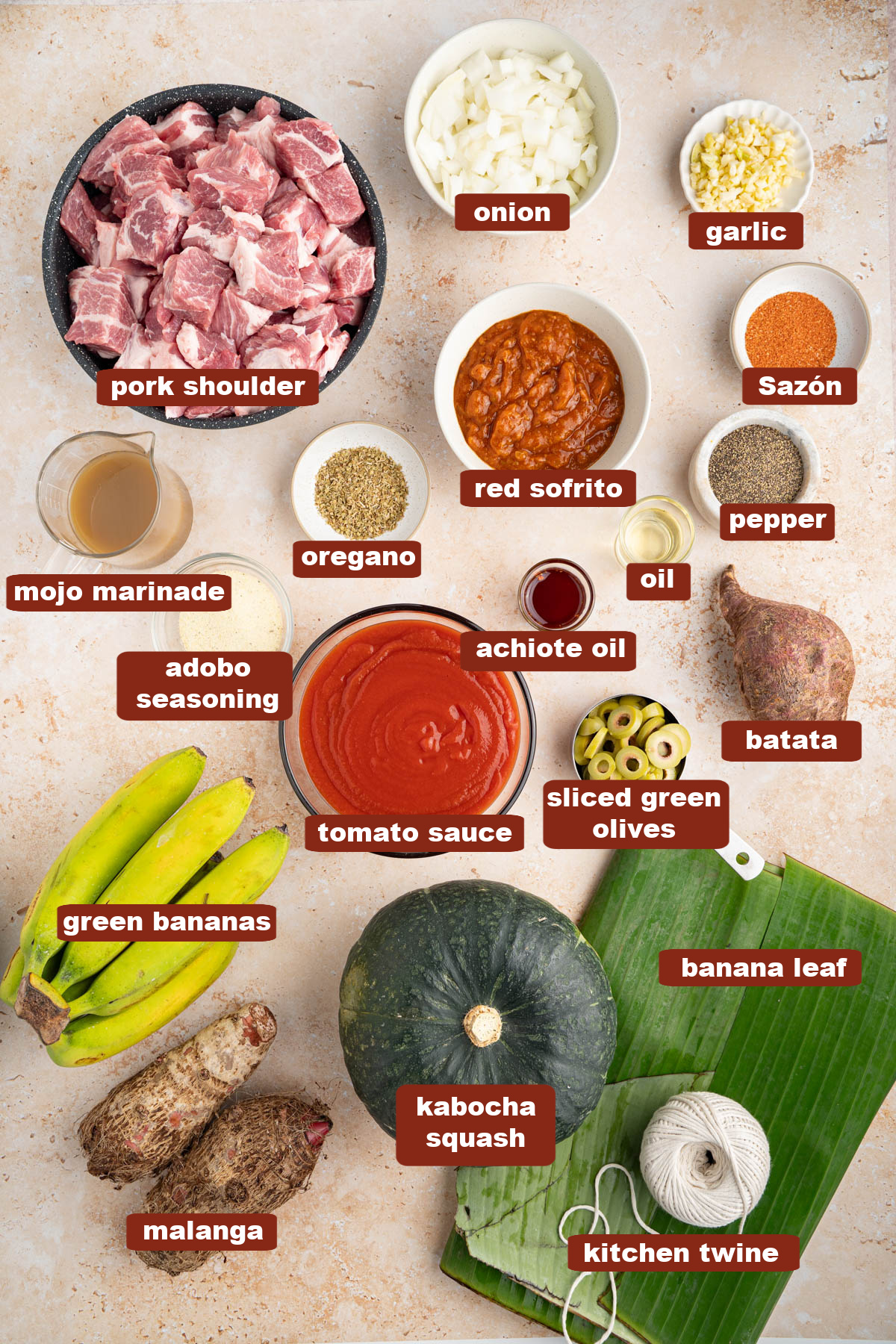
- Boneless Pork Shoulder – Pork shoulder is typically used for pasteles because it is full of flavor with plenty of fat, and will cook to a wonderful shreddable consistency.
- Red Sofrito – Sofrito is a base for a lot of Puerto Rican and other Latin cooking. Use store-bought or homemade sofrito.
- Sazón Packets – Sazón is a savory seasoning blend that normally includes annatto, coriander, cumin, and garlic. For the sazón packets, look for the Goya brand which has coriander and annatto in it.
- Dried Oregano – Dried oregano offers an herbaceous note to the pork, enhancing the complexity of the dish.
- Mojo Marinade – Mojo marinade is acidic and full of citrus flavors, which helps tenderize the pork during marinating and cooking. You can make your own mojo marinade or purchase a prepared version from the grocery store.
- Adobo Seasoning – This seasoning is at the heart of Latin cooking and is a mixture of several herbs and spices. This blend usually includes garlic powder, black pepper, turmeric, and oregano.
- Achiote Oil – This is a mixture of 3 tablespoons of oil and 1 tablespoon annatto powder.
- Goya Tomato Sauce – This tomato sauce is seasoned with spices that make it a wonderful choice for Latin cooking.
- Green Olives – Olives add a delicious briny taste to the pasteles and shouldn’t be skipped.
- Green Bananas – Green bananas are less sweet than fully ripe bananas, making them perfect to use in savory dishes like pasteles.
- Malanga – Malanga, otherwise known as eddoes, are a root vegetable similar to taro root.
- Kabocha Squash – This is a Japanese squash that has a wonderful sweet flavor and a texture that blends beautifully into the masa mixture.
- Batata – Batata is a Caribbean sweet potato that has a brilliant orange color and a sweet taste.
- Banana Leaves – You will need banana leaves to wrap the pork and masa into little bundles.
How to Make Puerto Rican Pasteles
Yes, pasteles are hard work and require a lot of time compared to most of my recipes. But that is what makes them so special! You can make it a family affair and create this dish together.
Or you can spread out the process over two days. Prep and cook the pork in advance and then finish the remaining steps. You can also make the masa in advance and store until you’re ready to use.
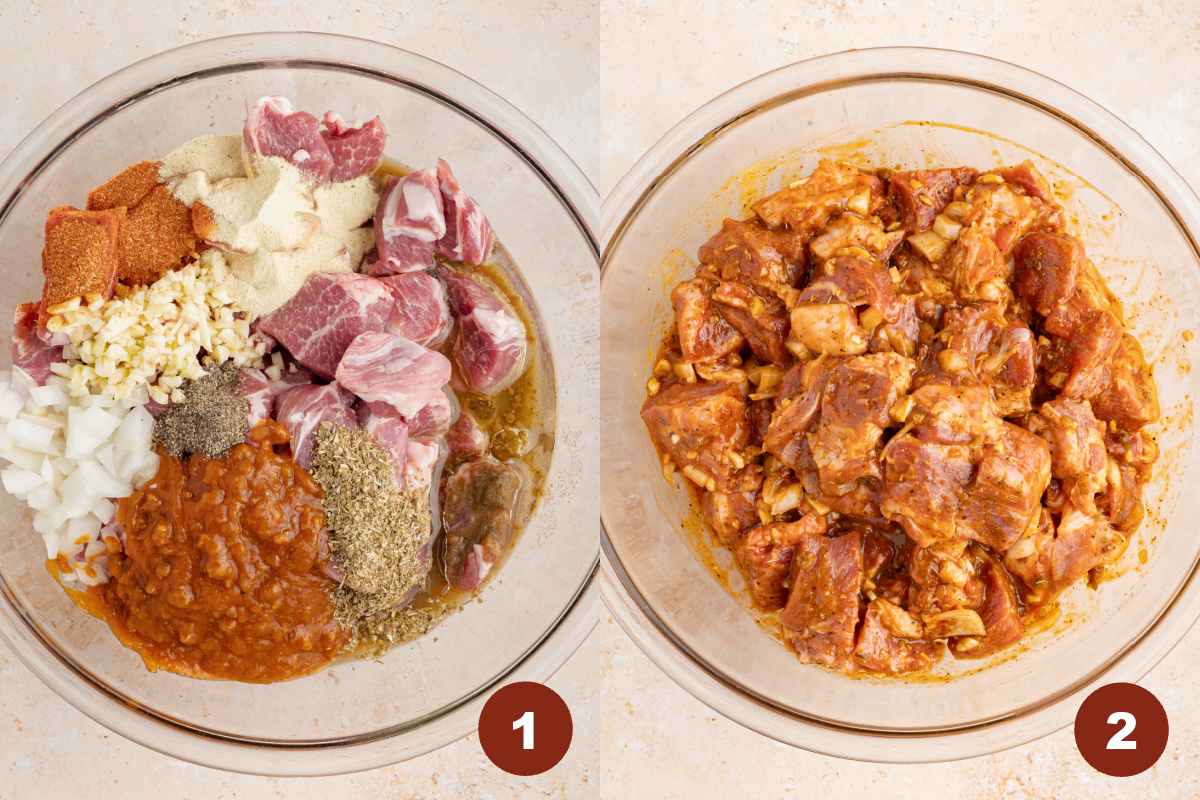
- Marinate the Pork: Place the cubed pork in a bowl with the onions, sofrito, garlic, sazón, oregano, mojo marinade, adobo seasoning, black pepper, and oil.
- Stir the mixture until combined, cover it, and place it in the fridge to marinate overnight.
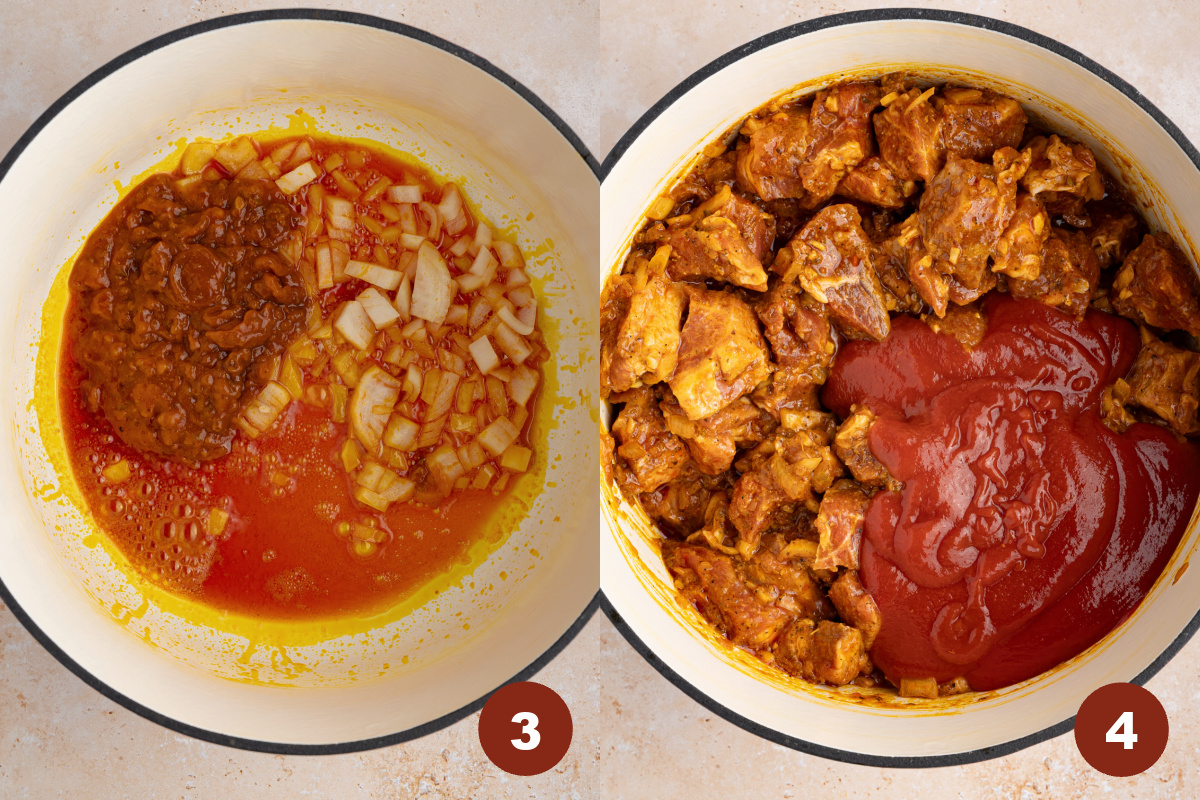
- Cook the Pork: First make the achiote oil by heating 3 tablespoons of oil with 1 tablespoon annatto powder for 2 to 3 minutes; strain the solids. Heat the achiote oil in a pot over medium-high heat; add the onion and sofrito, and cook it for 2 minutes, stirring frequently.
- Stir in the tomato sauce and add the marinated pork; then simmer on low for 5 to 7 minutes.
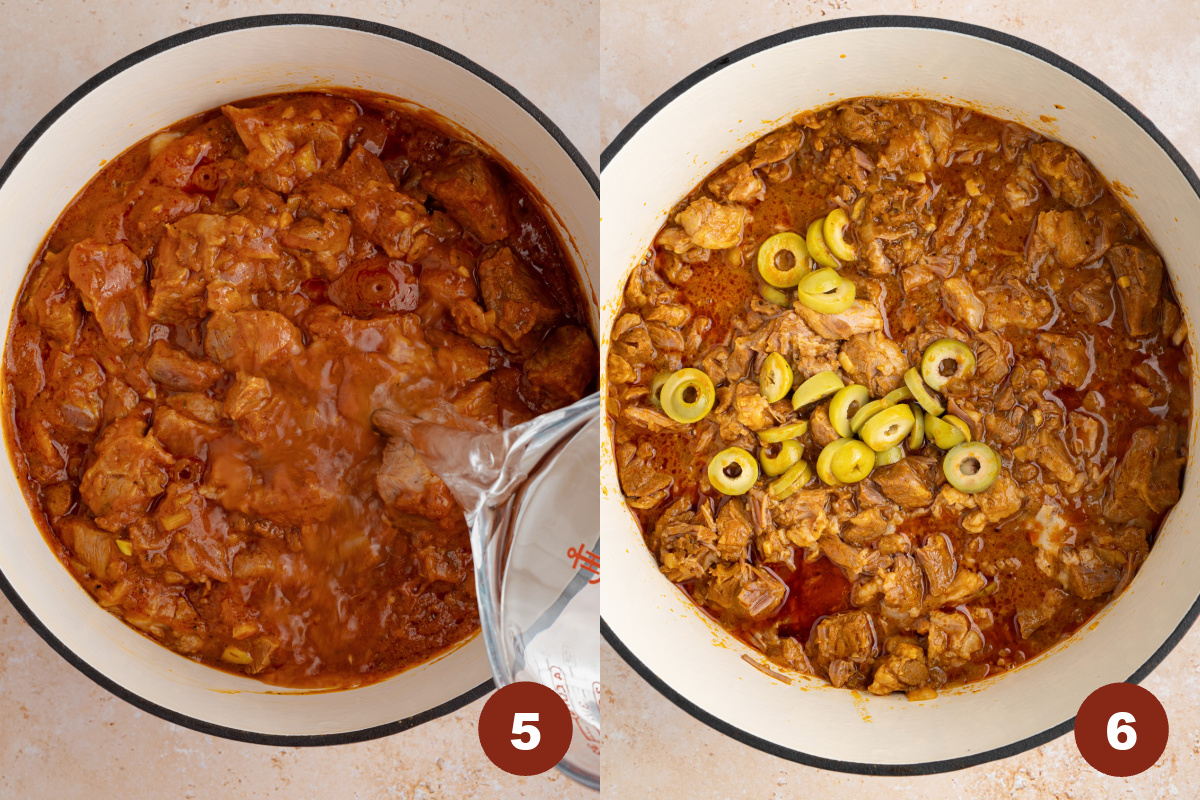
- Pour water over the mixture; cover it and allow it to simmer for 1 ½ to 2 hours until the pork is tender.
- Stir the olives and their liquid into the pork mixture. Shred the pork slightly, keeping it in small chunks.
TIP: Taste the pork filling before you assemble the pasteles so you know whether you have to adjust the seasonings.
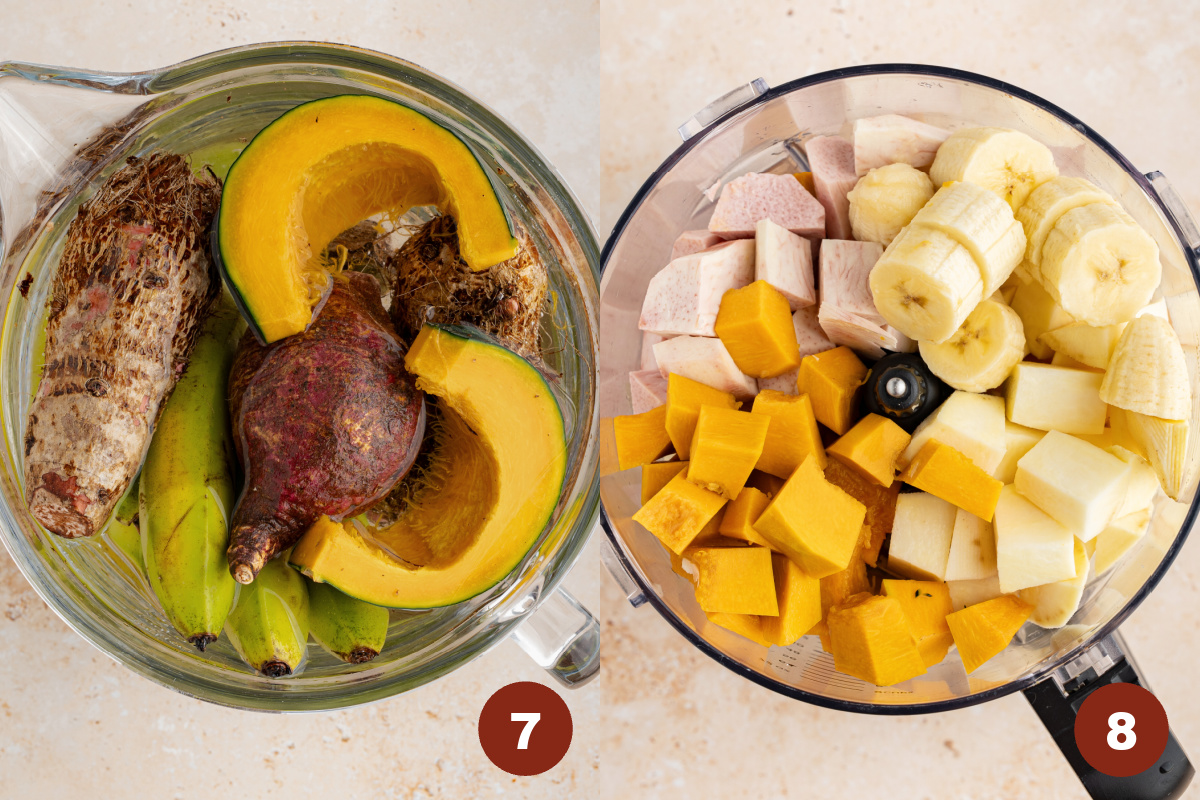
- Prepare the Masa: Soak the bananas, malanga, kabocha, and balata in a large pot of water or bowl of water for 10 to 15 minutes with their skins on, then peel.
TIP: Don’t skip the step of soaking the vegetables. Soaking them in water prior to blending them will result in a smoother masa mixture.
- Cut into chunks and process in a food processor until smooth.
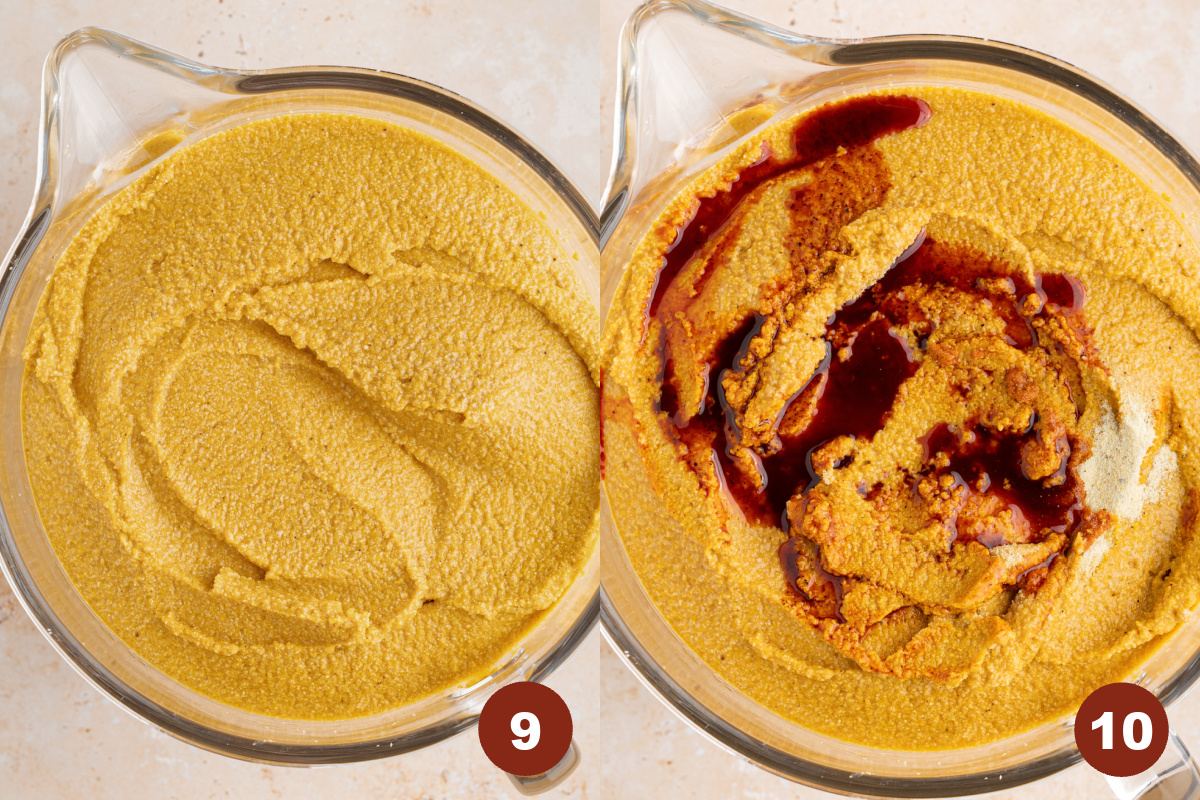
- Place the processed vegetable mixture in a large bowl.
- Mix in 2 tablespoons achiote oil and 2 tablespoons adobo seasoning until combined.
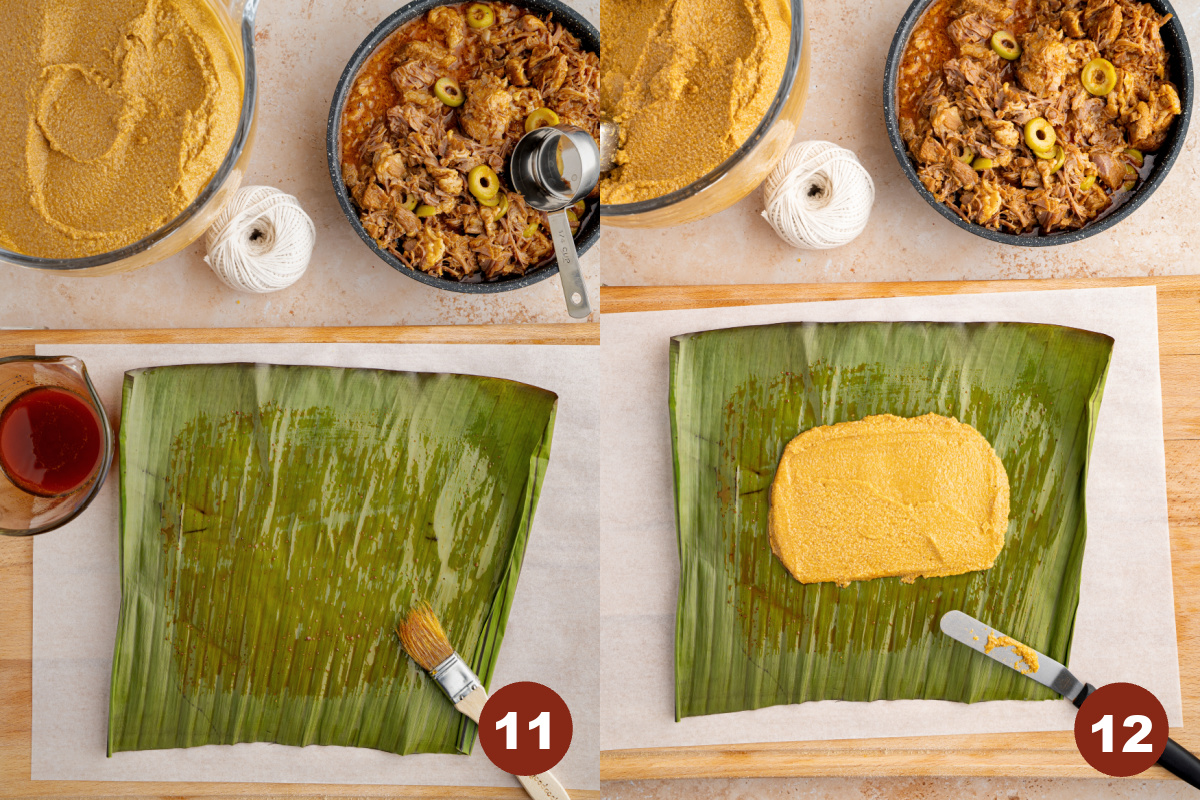
- Prepare Banana Leaves & Parchment: Soften the banana leaves over a flame or in hot water. Dry them thoroughly. Cut the banana leaves into large rectangles (mind are about 12×12-inch). Cut parchment squares that are slightly larger than the banana leaves. Brush each banana leaf with 2 tsp achiote oil.
- Layer Masa & Pork: Place a banana leaf on top of a square of parchment paper. Spread ¼ – ½ cup of the masa in the center of the banana leaf.
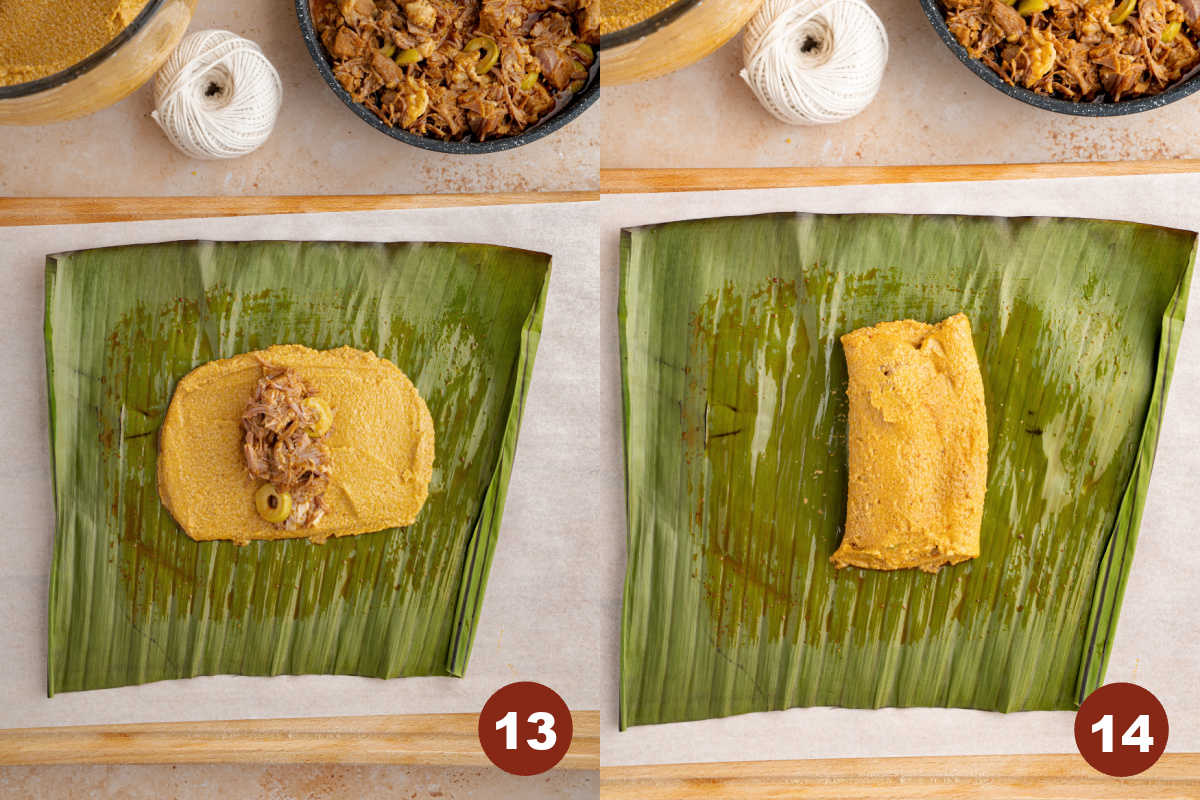
- Add 2 tablespoons to ¼ cup of the pork filling in the center of the masa.
- Fold masa over to cover the pork.
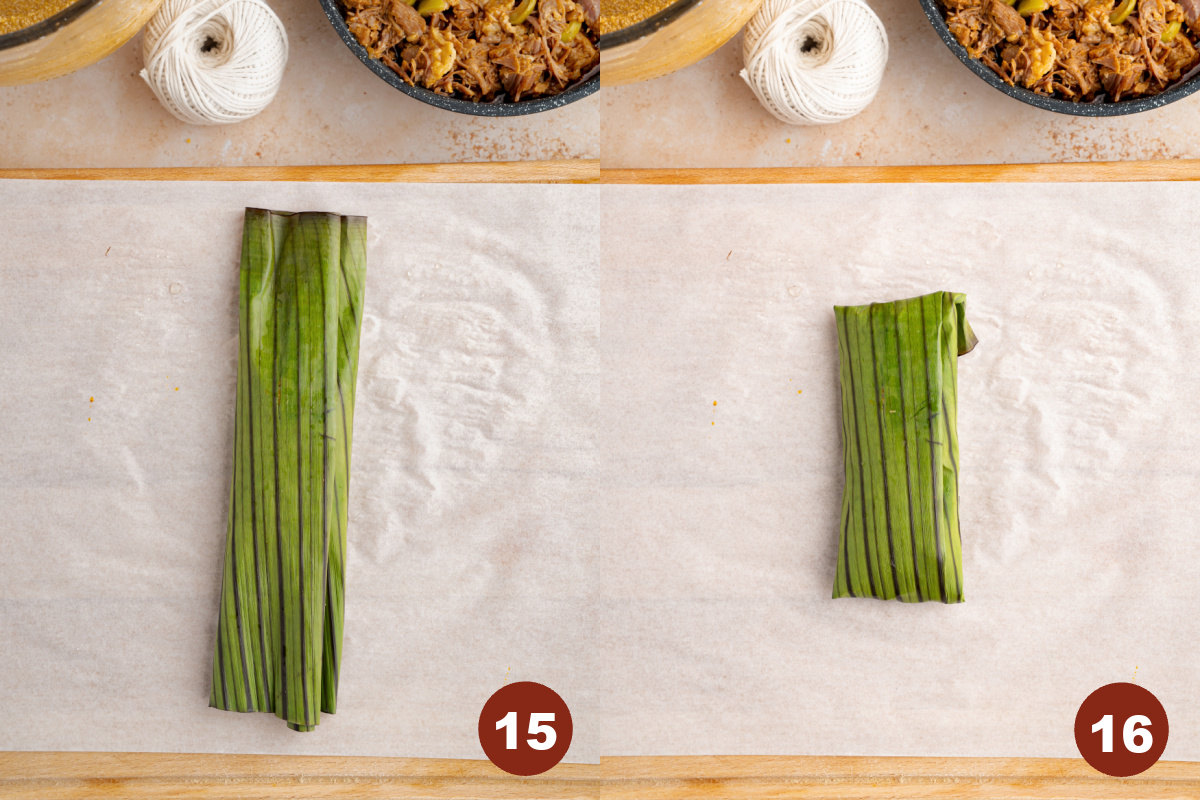
- Fold the Pasteles: Fold the long sides of the banana leaf and parchment paper together so they meet neatly over the filling.
- Fold the short sides inward to create a snug rectangle.
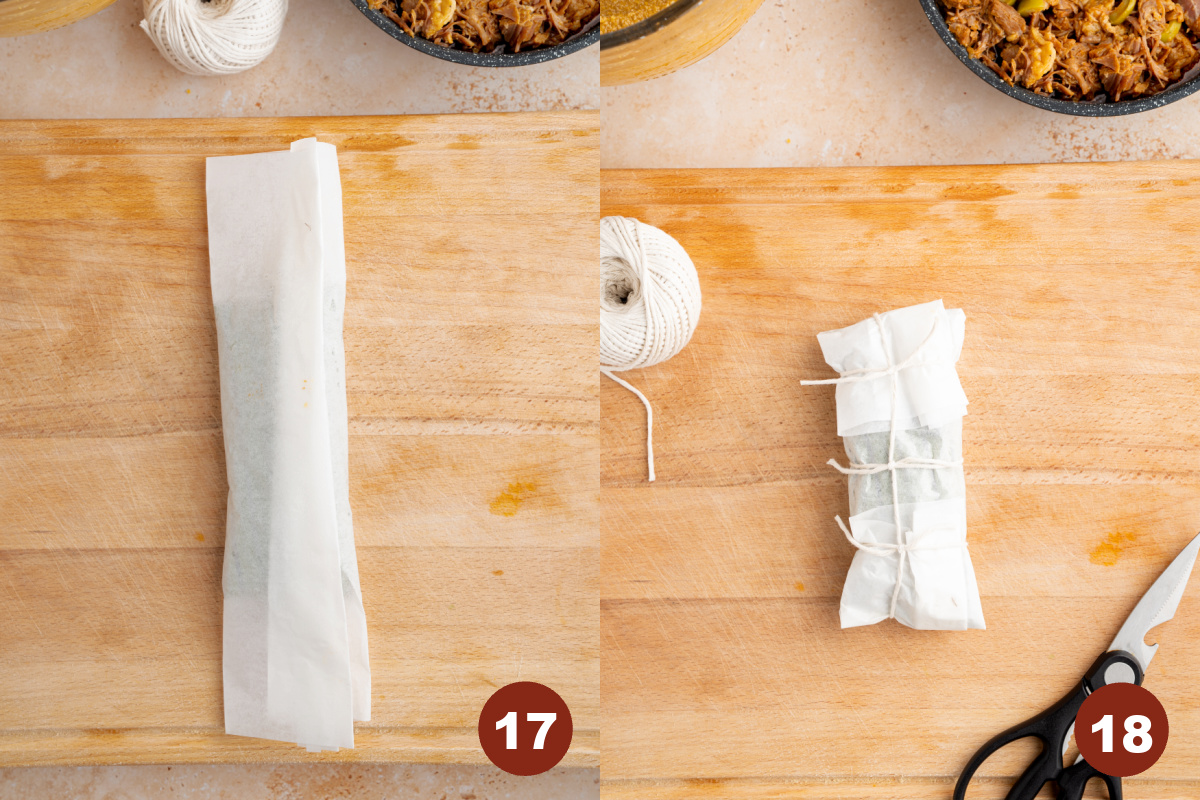
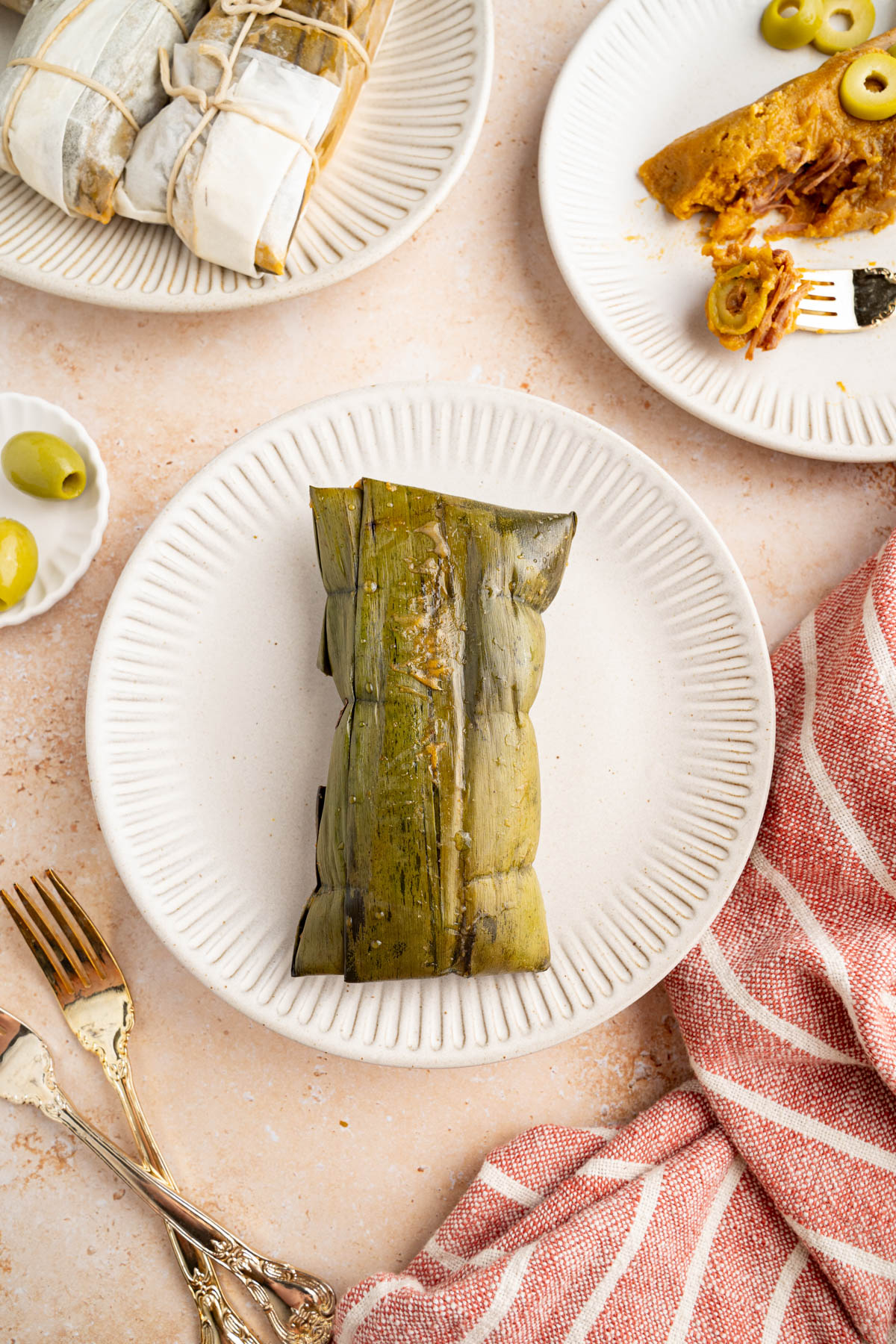
- Ensure that the parchment paper completely encloses the banana leaf. You can see how I fold over to form the closed pocket in the photos above.
- Tie each pastel (or two pastels together) securely with kitchen twine.
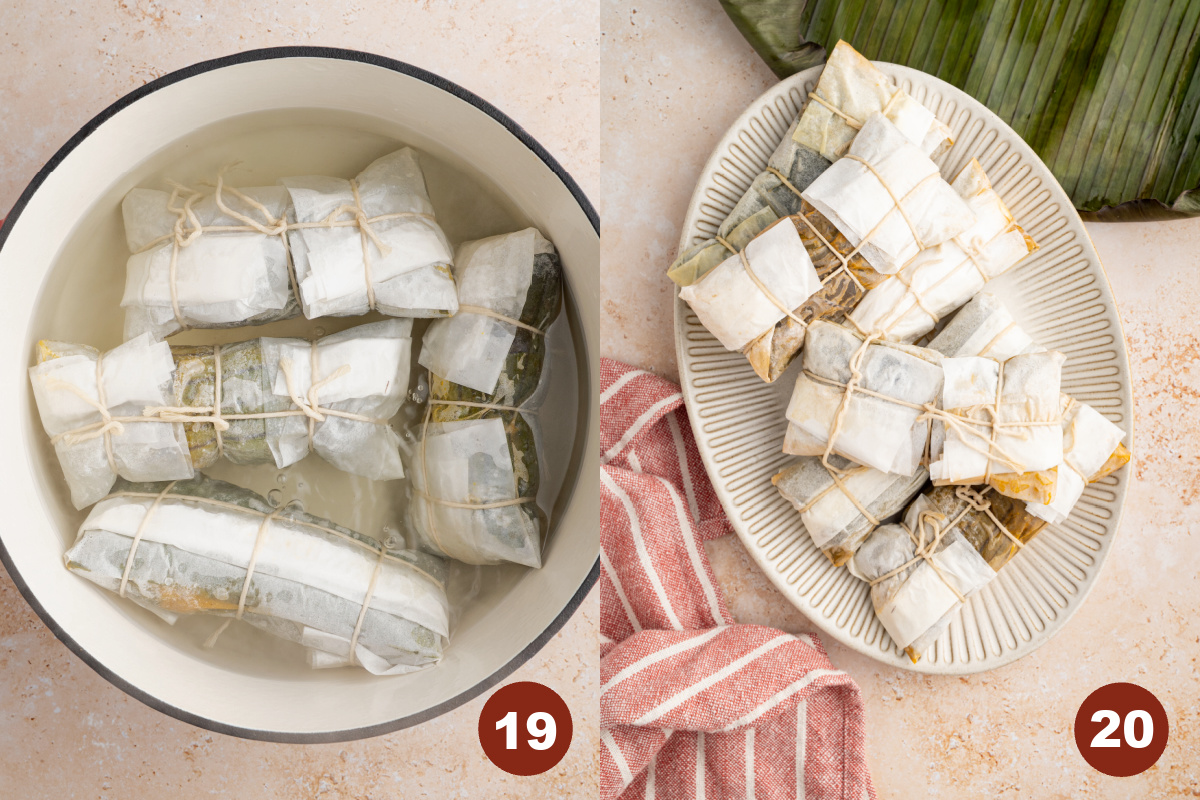
- Cook & Store: If you are cooking them fresh, cook the pasteles in boiling water for 45 minutes. Meanwhile, if you cook frozen pasteles, boil them for 1 hour 15 minutes from the freezer.
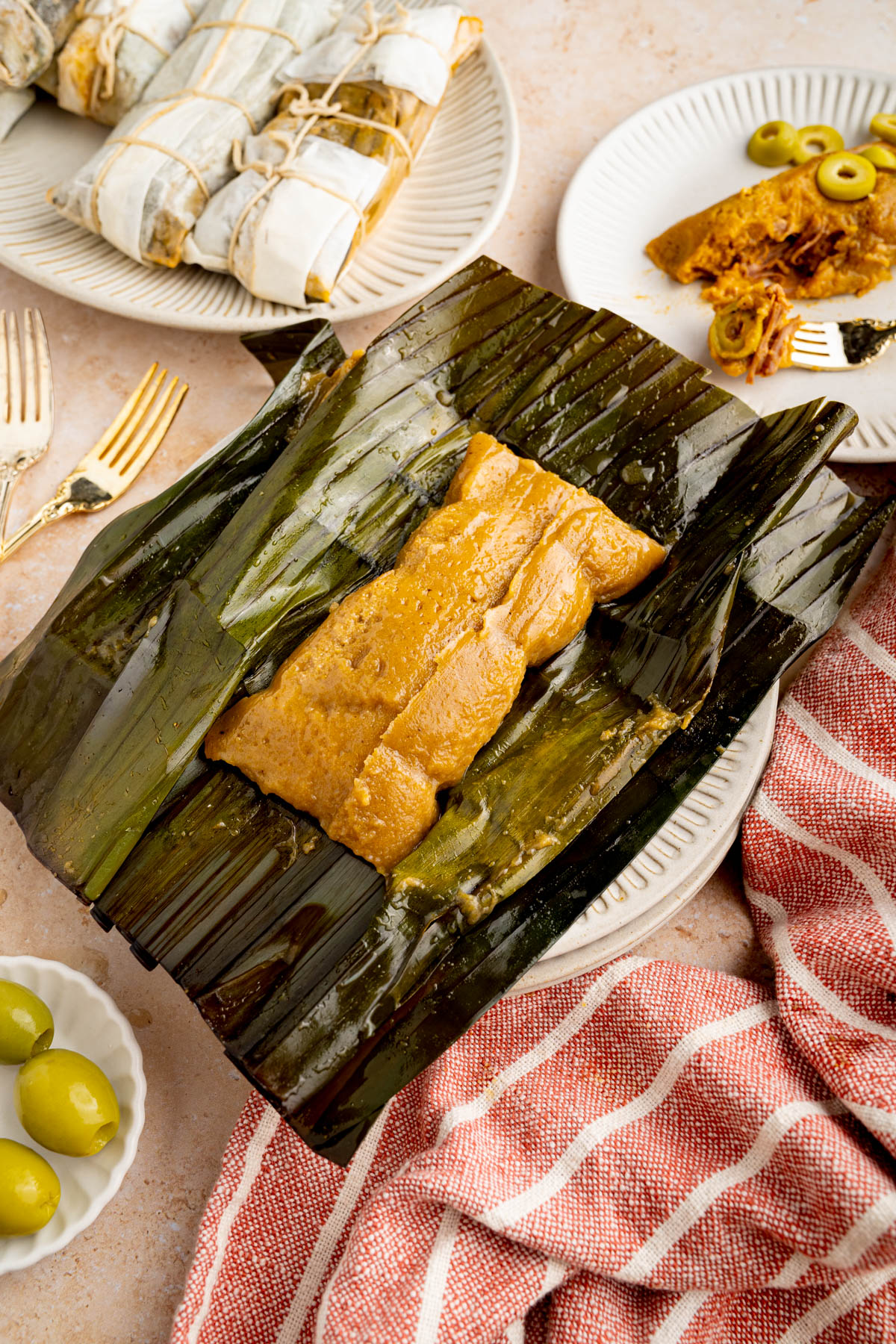
- Drain and allow them to rest for a few minutes before unwrapping them.
Expert Tips
- Taste Each Component for Seasoning: Before assembling the pork and masa pasteles, taste both the masa and pork, and adjust the seasonings as needed.
- Wrap With Parchment Paper: Use parchment paper to wrap the pasteles. This will help protect the pasteles and make them easier to handle.
Recipe FAQs
Puerto Rican pasteles normally include protein such as pork or chicken, along with a masa mixture made of vegetables, and bananas or plantains. This version uses tender pork with a masa made of green bananas, kabocha, malanga, and sweet potato. Another key component is the banana leaves that are used to enclose the fillings into little parcels.
Pasteles and tamales are similar to each other in that they are bundles of some type of dough, however, there are a few differences. While pasteles are a Puerto Rican dish involving a vegetable mixture and pork that are wrapped in banana leaves, tamales are a Mexican dish that include a corn husk wrapper and a corn masa filling.
In Puerto Rico, people eat pasteles with ketchup or hot sauce.
Pork shoulder is the best choice for pasteles as it is a fattier cut of pork, and therefore, has more flavor than cuts like tenderloin. It also shreds beautifully and becomes extremely tender with a lengthy cooking time.
How to Store Pasteles
Allow the pasteles to cool, then store them in the fridge or freezer. For the fridge, simply place them in a sealed container and they should stay fresh for up to 5 days. Meanwhile, if you would like to store them in the freezer, you can wrap them individually in plastic wrap or foil before placing them in a sealed freezer bag. They will be at their best if you consume them within 2 to 3 months of freezing them.
Puerto Rican Pasteles
Ingredients
Pork & Marinade
- 3 pounds boneless pork shoulder cut into 1-inch cubes
- 1/2 cup yellow onion diced (about 1/2 medium onion)
- 1/2 cup red sofrito
- 2 tablespoons minced garlic (about 6 cloves)
- 2 sazón packets (with achiote)
- 3 teaspoon dried oregano
- 1/2 cup mojo marinade
- 3 tablespoon adobo seasoning
- 1 teaspoon ground black pepper
- 3 tablespoon vegetable oil
For Cooking the Pork
- 3 tablespoons vegetable oil
- 1 tablespoon annatto powder
- 1/2 cup yellow onion diced
- 1/2 cup red sofrito
- 15 ounces Goya tomato sauce
- 3 cup water
- 1/2 cup sliced green olives with liquid
Masa
- 12 green bananas peeled
- 2 pounds malanga (yautia)
- 1/2 kabocha squash (about 2 pounds), peeled and cut
- 1 large batata (Caribbean sweet potato)
- 2 tablespoon achiote oil (2 tablespoons oil + 2 teaspoon annato powder, heated)
- 2 teaspoon adobo seasoning
Wrapping & Cooking
- 1 large pack banana leaves (rims removed, cut into 7 1/2 x 6-inch rectangles)
- Parchment paper sheets (~8 1/2 x 11-inch)
- Kitchen twine
- 3/4 cup Achiote oil for brushing banana leaves (from 3/4 cup oil + 4 tablespoons annato powder; ~2 teaspoons per pastel)
Instructions
Marinate the pork overnight:
- In a large bowl, combine the pork cubes with onion, sofrito, garlic, sazón, oregano, mojo marinade, adobo seasoning, black pepper, and vegetable oil.
- Mix well, cover, and refrigerate overnight to marinate.
Cook the pork:
- To make the achiote oil, heat the vegetable oil. Add the annatto powder to the oil and simmer for 2–3 min; strain solids.
- Heat the achiote oil in a large pot. Add the onion, and sofrito. Cook, stirring frequently for 2 minutes. Stir in the tomato sauce and marinated pork. Cook for 5-7 min.
- Add 3 cups water, cover, and simmer for 1 1/2 – 2 hours until the pork is tender.
- Add the sliced olives with liquid. Shred the pork slightly, keeping small chunks.
Prepare the masa:
- Soak the bananas, malanga, kabocha, and batata in water for 10–15 minutes with skin on, then peel. Cut into chunks and process in a food processor until smooth.
- Place the processed vegetables in a large bowl. Stir in 2 tablespoons achiote oil and 2 tablespoons adobo seasoning until smooth and uniform.
Assemble Pasteles
- Soften the banana leaves over a flame or with hot water, then dry.
- Cut the banana leaves into large rectangles (I used roughly 12×12 size).
- Cut the parchment paper slightly larger than banana leaf.
- Brush the banana leaf with ~2 teaspoon achiote oil per pastel (¾ cup total).
- Place the banana leaf rectangle on top of the parchment paper.
- Spread ¼-½ cup masa in the center of the banana leaf. Add 2 tablespoons to ¼ cup pork filling on top of the masa. Fold the masa over to cover the pork.
- Fold the long sides of the parchment and banana leaf together so they meet neatly over the filling. Fold the short sides inward tightly, creating a snug rectangle. Ensure the banana leaf is completely enclosed by the parchment.
- Tie each pastel (or two pasteles together) securely with kitchen twine.
Cook & Store
- Fresh: Bring a large pot of water to a boil. Cook the bundles in the water for 45 minutes.
- Frozen: Boil 1 hour 15 minutes straight from the freezer.
- Drain and let rest a few minutes before unwrapping and serving.
Notes
- Leftover masa: You may have leftover masa. You can store the leftover masa in an airtight container in the fridge for up to 3 days or in a freezer safe container in the freezer for up to 2 months.




I finally tried making these and whew 😂 they took some time, but they were worth it. They came out really good
These are a labor of love, but such a great reward at the end. Get your family and friends together to help make these. The meat filling was our favorite!
I’ll be trying this recipe for the holidays 😊